
Bicycle brake condition comprehensive testing machine
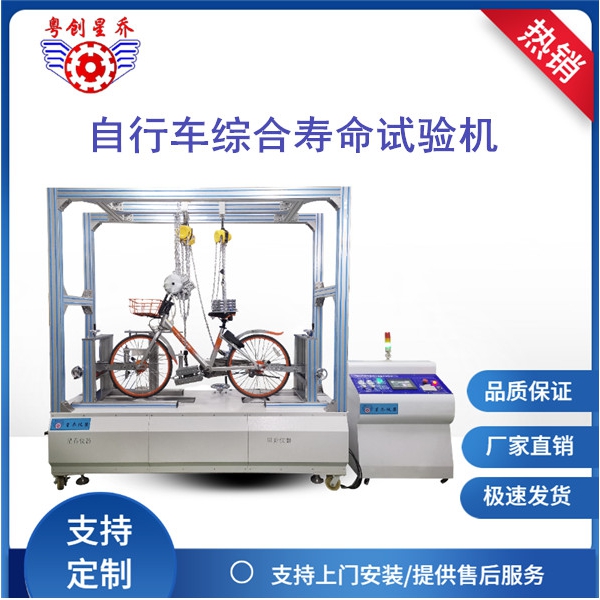
XQ-896G Bicycle Braking Condition Comprehensive Testing Machine
I. Application scope of the bicycle testing machine:
It is suitable for comprehensive testing of the road conditions and braking performance of bicycles/transport vehicles/complete vehicles. It is designed and manufactured in accordance with the testing standards of various countries' regulations. It consists of two wheels with different diameters and is equipped with a platform and a complete vehicle seat tube handlebar shelf according to the specifications, and all the load-bearing weights are fixed on this testing instrument.
II. Testing Standards for Bicycle Testing Machine:
The self-braking fatigue road condition comprehensive tester is designed in accordance with European standards EN14764, EN14765, EN14766 and relevant national standards.
III. Main technical parameters of the bicycle testing machine:
1.Machine dimensions (mm): Approximately 3260 x 900 x 260
2. Rotating wheel diameter (mm): According to the standard
3. Distance adjustment (mm): Adjustable
4. Obstacle height: As per the standard configuration
6. Power supply voltage: 380V ± 10% 50Hz
7. Weight: Approximately 1560 kg
8. Speed unit: Arbitrary conversion
9. Test speed (km/hr): Adjustable
IV. Operating Procedures for Bicycle Testing Machine:
First, fix the finished vehicle on the test platform, attach the standard counterweight weights, connect the mechanical main power supply, bring the machinery into an energized state, set the required test values, start the test, when the set value is reached, the machinery will automatically shut down.
V. Notes for the Bicycle Testing Machine:
1.Before conducting the test, please make sure that the power supply is correctly plugged in or connected. For mechanical devices that require an air source, ensure that the air source is also properly connected.
2. Before conducting the test, make sure that the product is properly installed and fixed.
3. The mechanical transmission parts must be maintained regularly.
4. After the test is completed, it is necessary to ensure that the power supply has been turned off.
5. It is strictly prohibited to use auxiliary corrosive liquids to clean the machine. Instead, rust preventive oil must be used.
6. This testing machine must be used exclusively by one person. During the testing process, it is strictly prohibited to strike the machine or have anyone stand near it.