
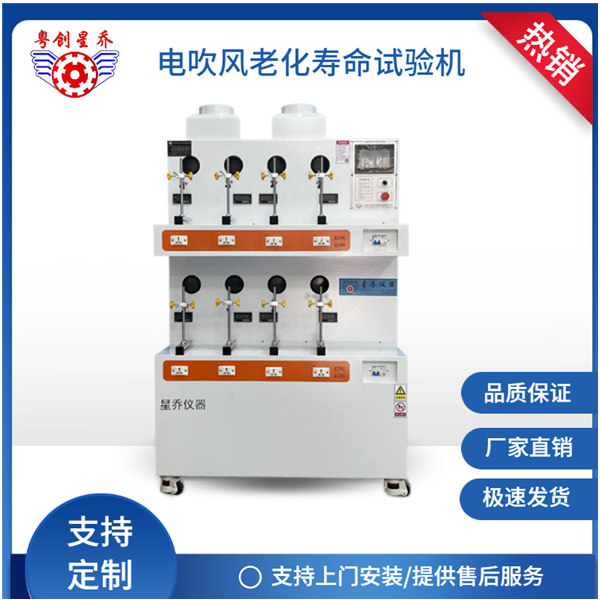
Why is an aging test machine needed for hair dryers?
The specific reasons can be summarized as follows:
Simulating real usage scenarios
Predicting potential failure risks. The core components of the hair dryer, such as the motor, heating wire, switch, and power cord, are prone to aging issues under repeated startup, continuous heating, and high-frequency vibration conditions: for instance, the heating wire may oxidize and break, the motor bearing may wear out and become stuck, and the insulation layer of the power cord may age and become damaged. The aging test machine can simulate the product's several years of usage wear and tear in a short period through accelerated aging tests (such as long-term continuous operation, temperature cycling, and humidity variation), enabling the early detection of weak links in the components and optimizing the design.
Compliance with mandatory safety standards
Obtaining market access certification. Hair dryers, as household appliances, must comply with national mandatory standards (such as GB 4706.1 "Safety of Household and Similar Electrical Appliances - Part 1: General Requirements"). The standards clearly require aging tests for the durability, heat resistance, and insulation of the appliances. Only products that pass the aging tests can obtain the 3C certification and legally enter the market for sale.
Ensuring user safety
Avoiding after-sales and legal risks. If no aging tests are conducted, the product may experience leakage, overheating, fire, or motor jamming during long-term use, which not only leads to user complaints and soaring after-sales costs, but also may cause safety accidents, leaving the brand liable to legal prosecution. Aging tests are a "safety check" before product launch, effectively reducing such risks.
- Pre:none
- Next:What is a standard system?